The treatment line was poorly prepared
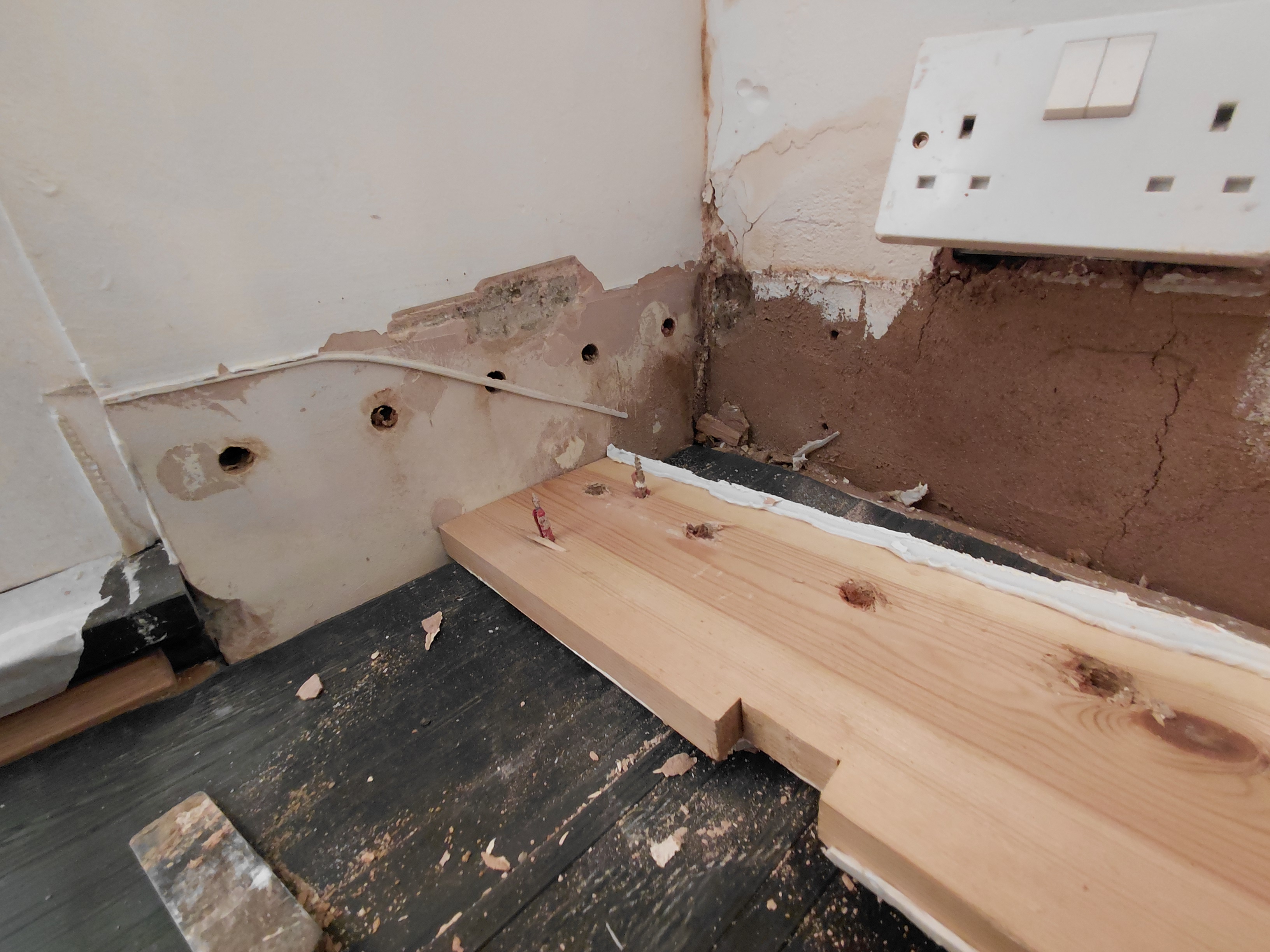
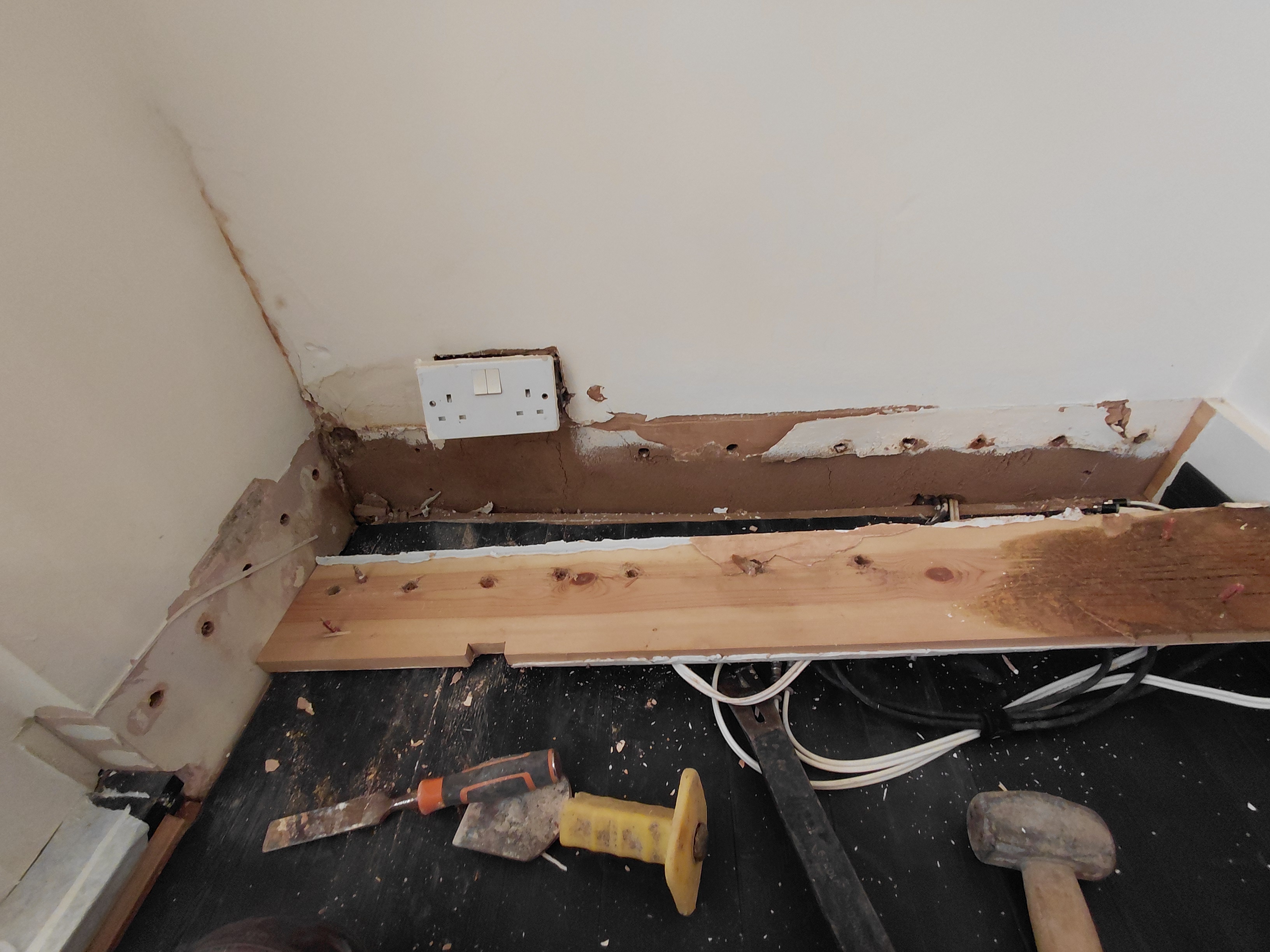
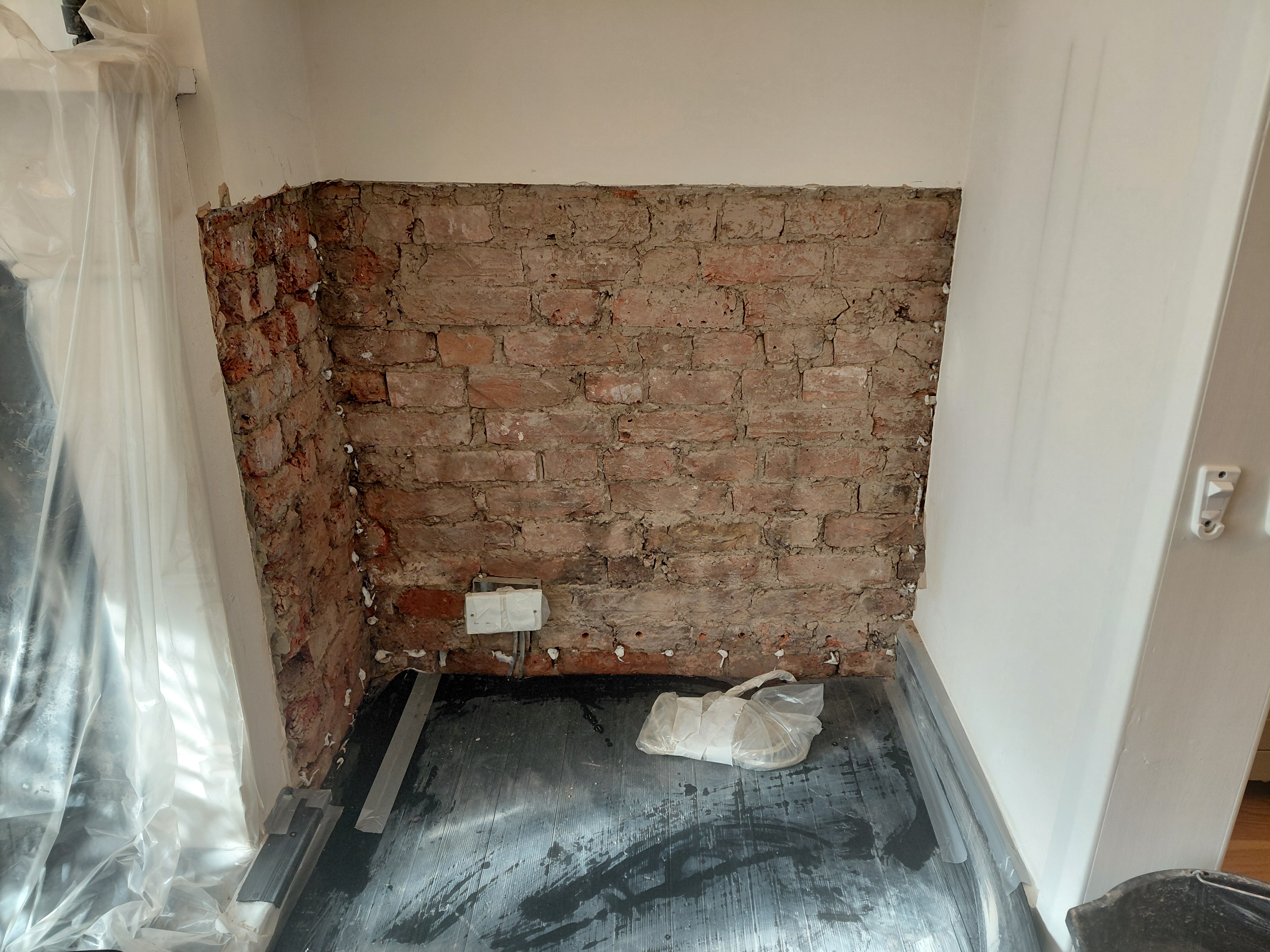
The earlier injection holes were visible through the skirting area. Effective treatment needs access to the masonry and a specification suited to the wall—not drilling through decorative timber.

A previously treated wall continued to suffer from low-level damp. The earlier work had been drilled through the skirtings, and bonding plaster had been applied over the affected area without correcting the damp.
The affected area was inside a terraced house in Wimbledon SW19. Although damp-proofing work had been attempted previously, the wall continued to show signs of moisture at low level.
The photographs showed injection holes drilled through the timber skirting rather than a properly prepared masonry treatment line. The wall had also been coated with bonding plaster. Bonding is a backing plaster—not a remedy for rising damp—and it does not remove the moisture source or deal with salts already present in the wall.
Atruss Preservation opened the area, assessed the previous work and completed a new rising-damp repair with the damaged materials removed and the wall reinstated.
The earlier injection holes were visible through the skirting area. Effective treatment needs access to the masonry and a specification suited to the wall—not drilling through decorative timber.
Bonding plaster does not stop rising moisture and is not designed to resolve salt contamination. Covering the wall did not correct the underlying damp mechanism.
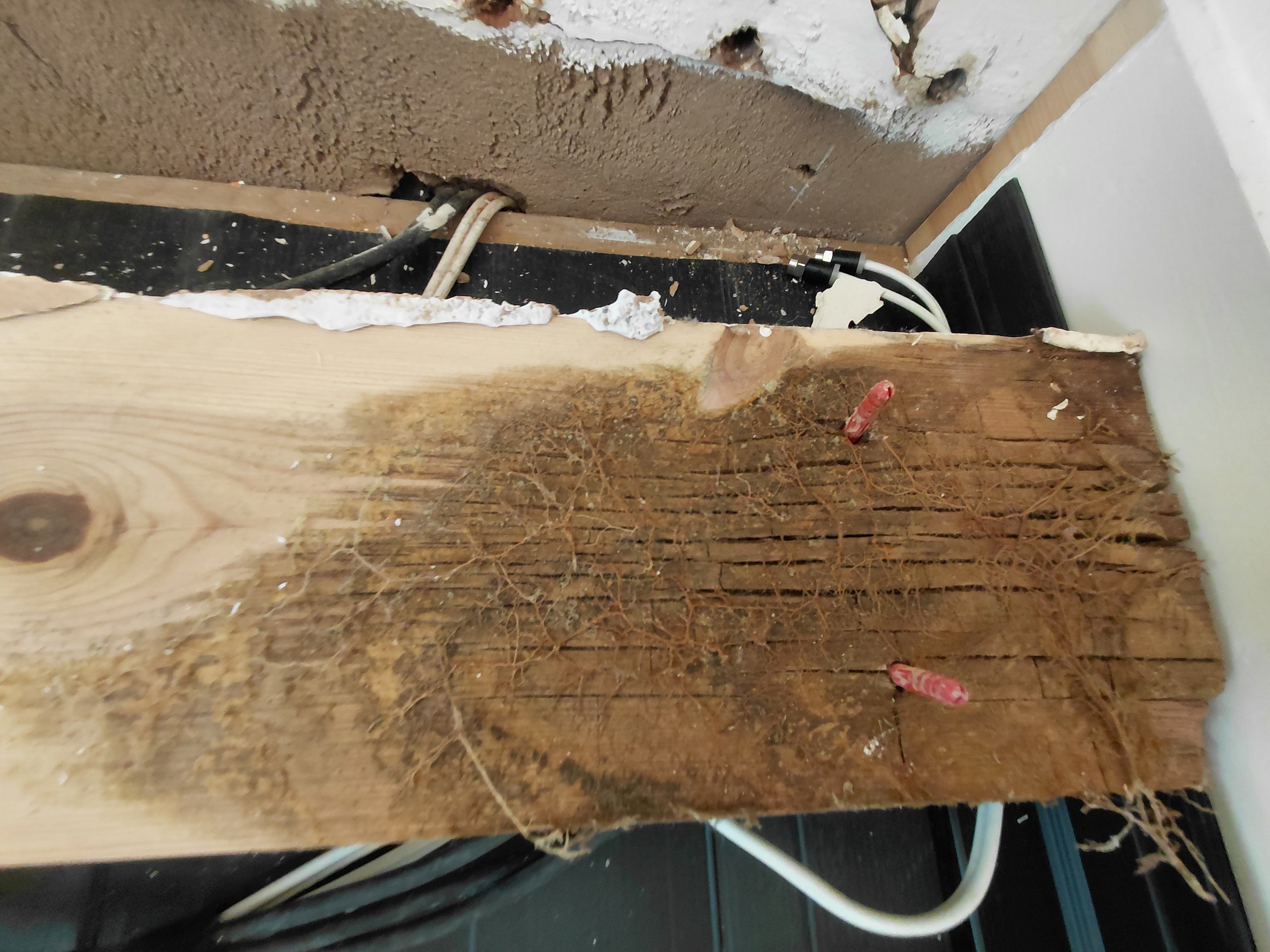
Once the skirting area was opened, local timber deterioration could be seen. Damp repairs should include damaged finishes and timber where their condition requires it.
The affected finishes and skirting area were opened so the masonry, old injection points and timber condition could be assessed.
The bonding and damp-affected materials were taken back to a sound background rather than being covered again.
A new damp-proofing treatment was prepared in the masonry at the appropriate low-level line.
The treated section was rebuilt with a finish selected for the remedial damp-proofing specification.
The skirting zone and adjoining details were repaired after the damp work rather than drilled through.
The completed photographs show the repaired wall and surrounding area ready for normal use and decoration.
Each photograph opens the original full-size image in a new tab.
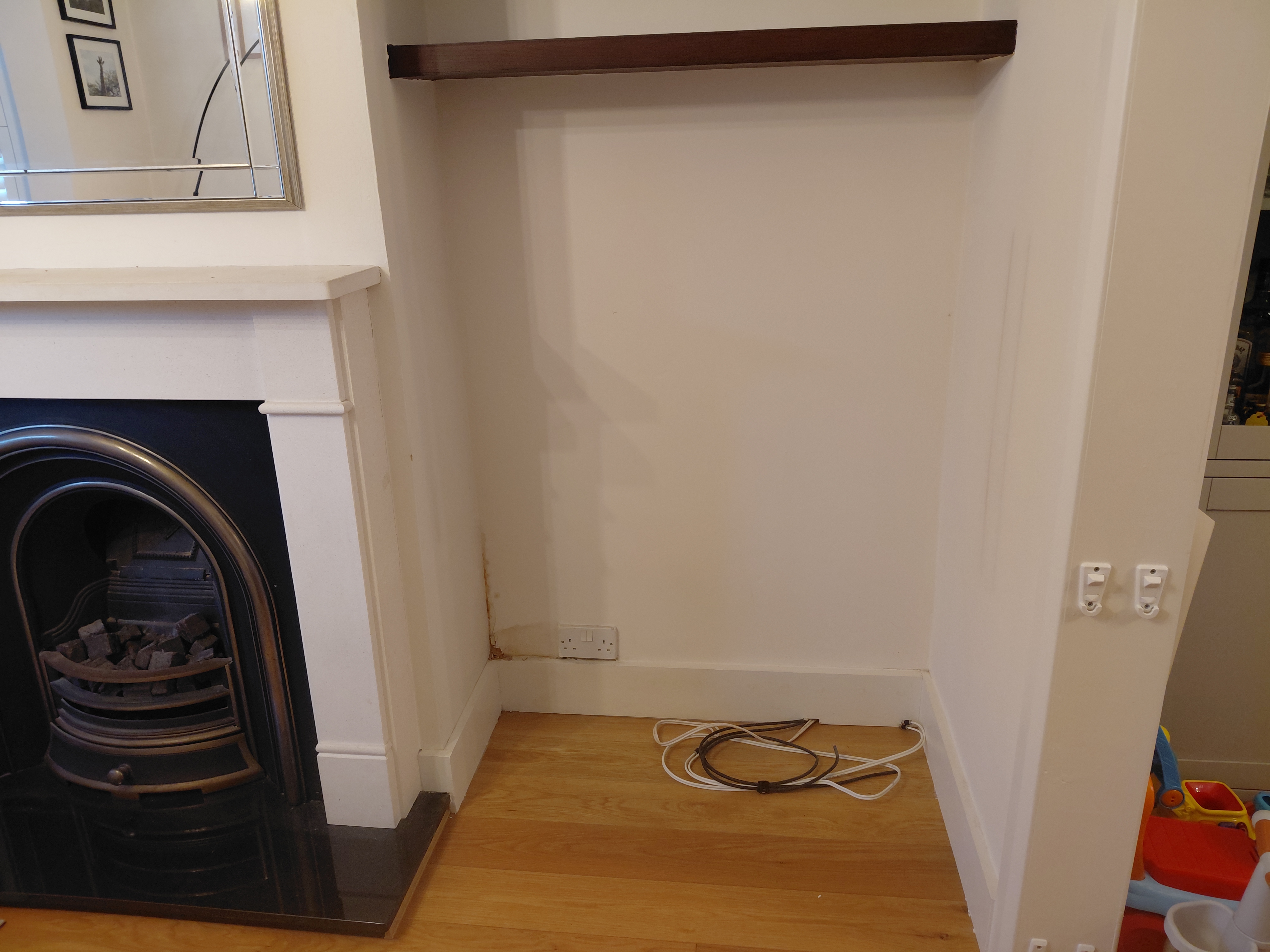
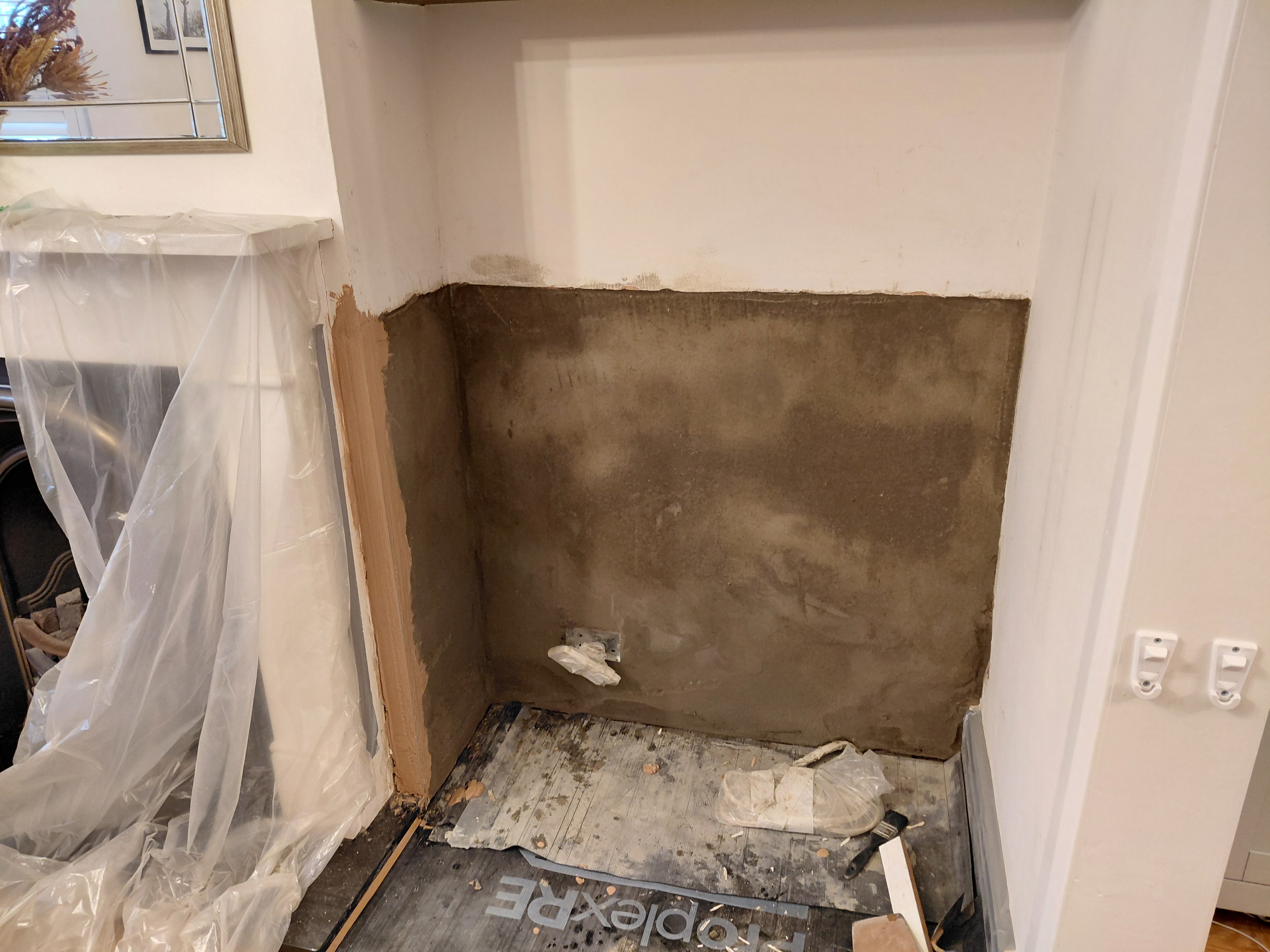
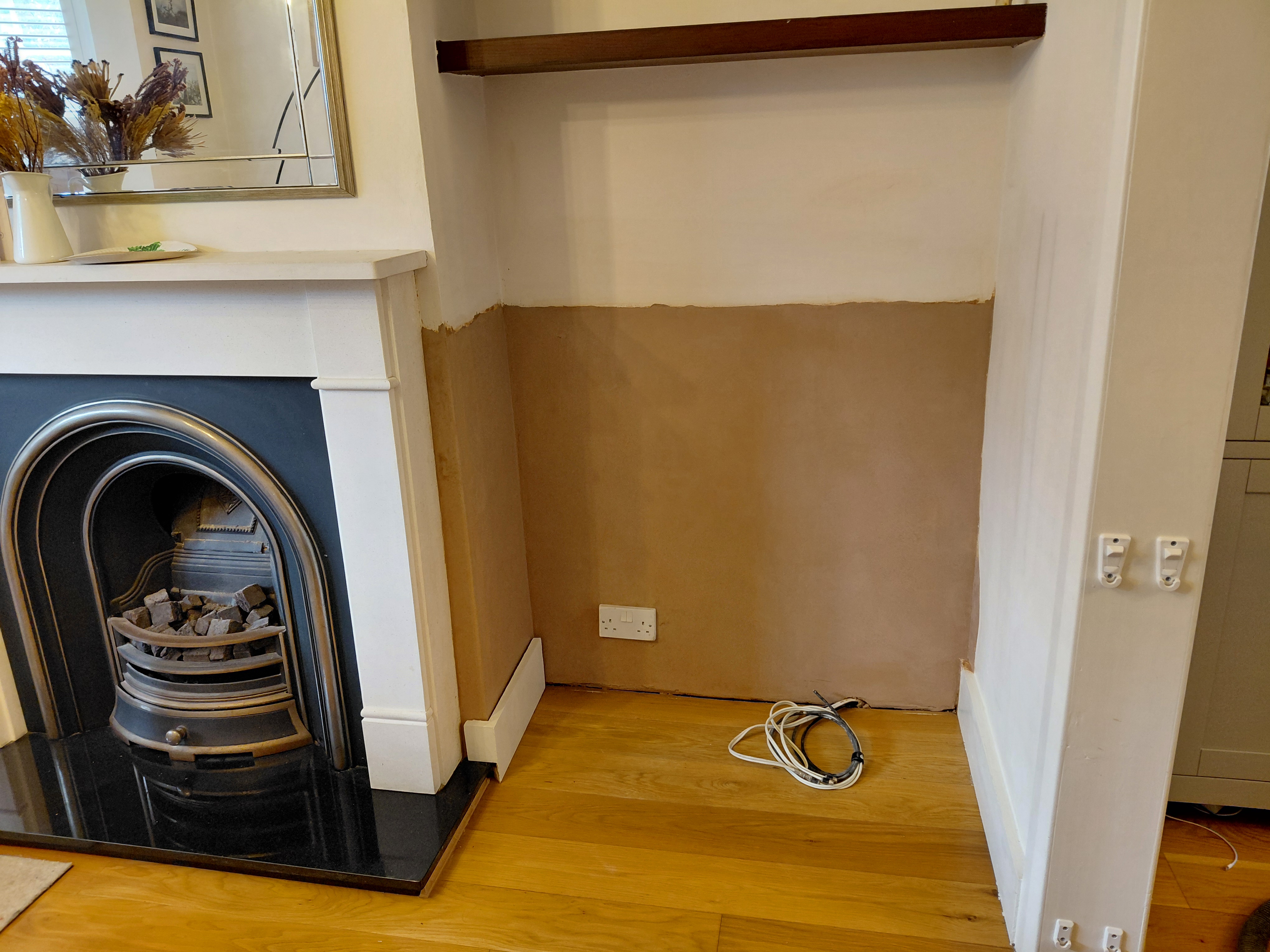
The completed project replaced an earlier cosmetic approach with a repair based on access to the masonry, removal of unsuitable damp-affected material and a renewed treatment specification.
The visible earlier work had been drilled through the skirting area and the wall was covered with bonding plaster. Bonding did not correct the moisture source or provide a suitable remedial damp-plaster specification.
No. Leaks, external ground levels, bridged DPCs and condensation can cause similar damage. The source should be investigated before treatment is selected.
Yes. Call 07984 712 428 or use the contact form to discuss the symptoms and arrange the next step.
Contact Atruss Preservation for an assessment and a clear written quotation.