Assess the extent
The affected area was assessed beyond the height of the previous repair. The old treatment boundary was not used as the limit for the new work.

A completed project in a semi-detached home where damp symptoms had extended above an earlier treatment by another company. A targeted repair removed defective plaster beyond the affected area and reinstated the wall finishes.
The owner of this semi-detached property in Carshalton Beeches SM5 had already had damp-proofing work carried out by another company. Rising damp symptoms subsequently appeared higher than the area previously treated, with defective wall finishes in the kitchen requiring further attention.
Atruss Preservation completed the remedial work shown in this case study. The scope focused on removing affected finishes and repairing the necessary wall areas to help control costs, rather than automatically stripping every wall to full height.
The affected area was assessed beyond the height of the previous repair. The old treatment boundary was not used as the limit for the new work.
Defective work was cut back and removed at least 30 cm above the areas registering damp, providing a margin above the affected finish while limiting unnecessary removal.
The photographs record exposed brickwork, reinstatement layers and the completed plaster finish. The finished areas were left ready for the required drying period before decoration.
The 30 cm margin describes this project. Removal heights and materials should follow the condition of the wall, salt assessment and the selected repair system. The underlying moisture source also needs to be addressed for a lasting result.
Porous masonry can draw liquid water through connected pores by capillary action. The extent depends on the available moisture, wall materials, evaporation and building conditions; rising damp does not have one fixed height in every property.
As moisture moves through masonry it can carry soluble salts. Water evaporates at the wall surface, leaving salts behind. Some salts attract moisture from humid indoor air, so plaster may remain damp-looking or give elevated electrical readings even when the original water supply has changed. Contamination may extend beyond the most obvious staining.
A repair to the surface alone does not necessarily stop moisture entering the wall. High external ground levels or a bridged DPC, defects in an existing damp-proof course, leaks and penetrating rainwater should be considered. These can produce overlapping symptoms and should be investigated before deciding whether a new DPC is appropriate.
Assessment of the pattern, construction and salts helps determine the extent of remedial plaster removal and reinstatement. Learn more about our rising damp investigation and treatment service.
Photographs follow the work from the existing kitchen finishes through removal, preparation and reinstatement. Select a photograph to open the full image.
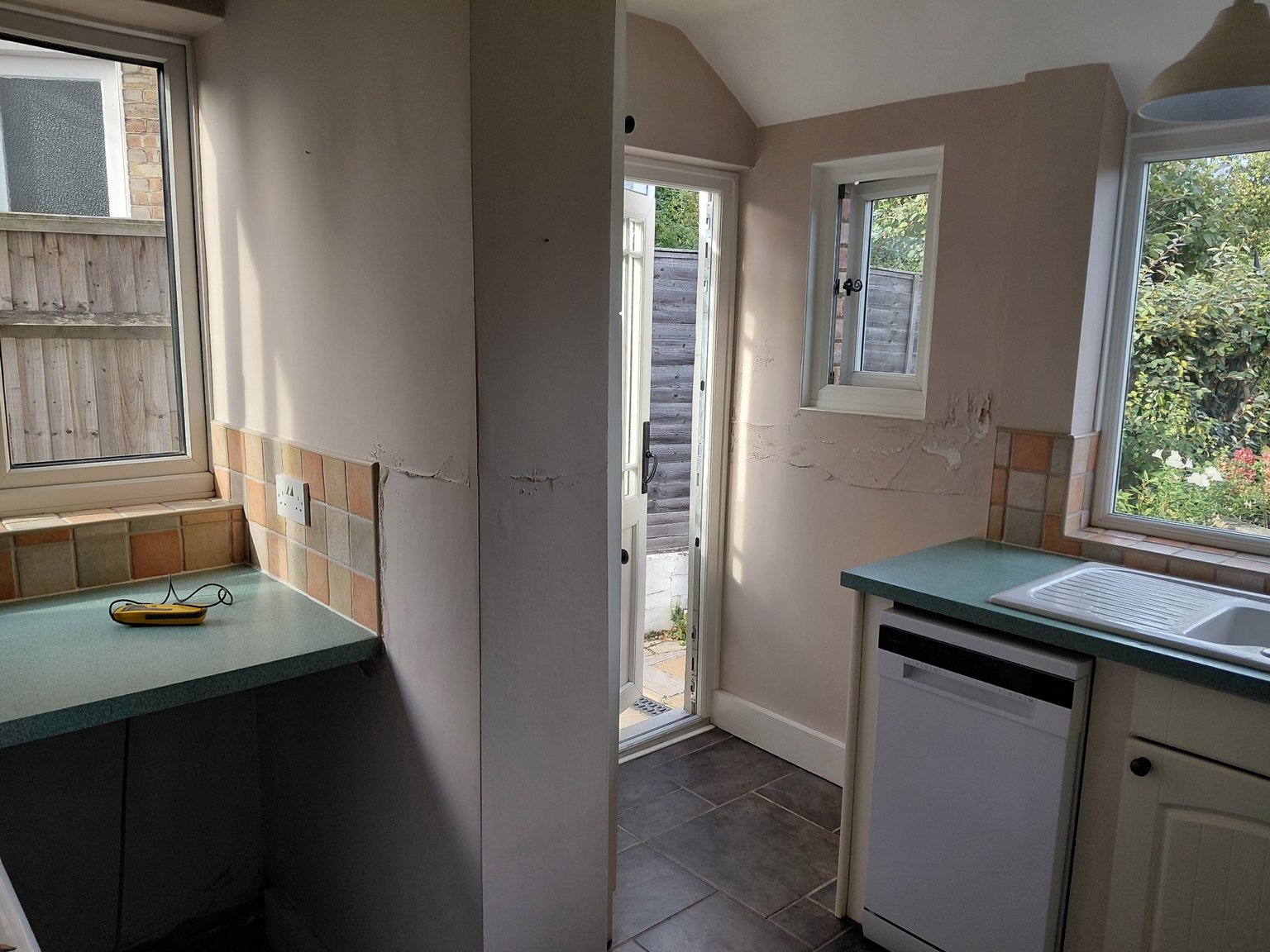
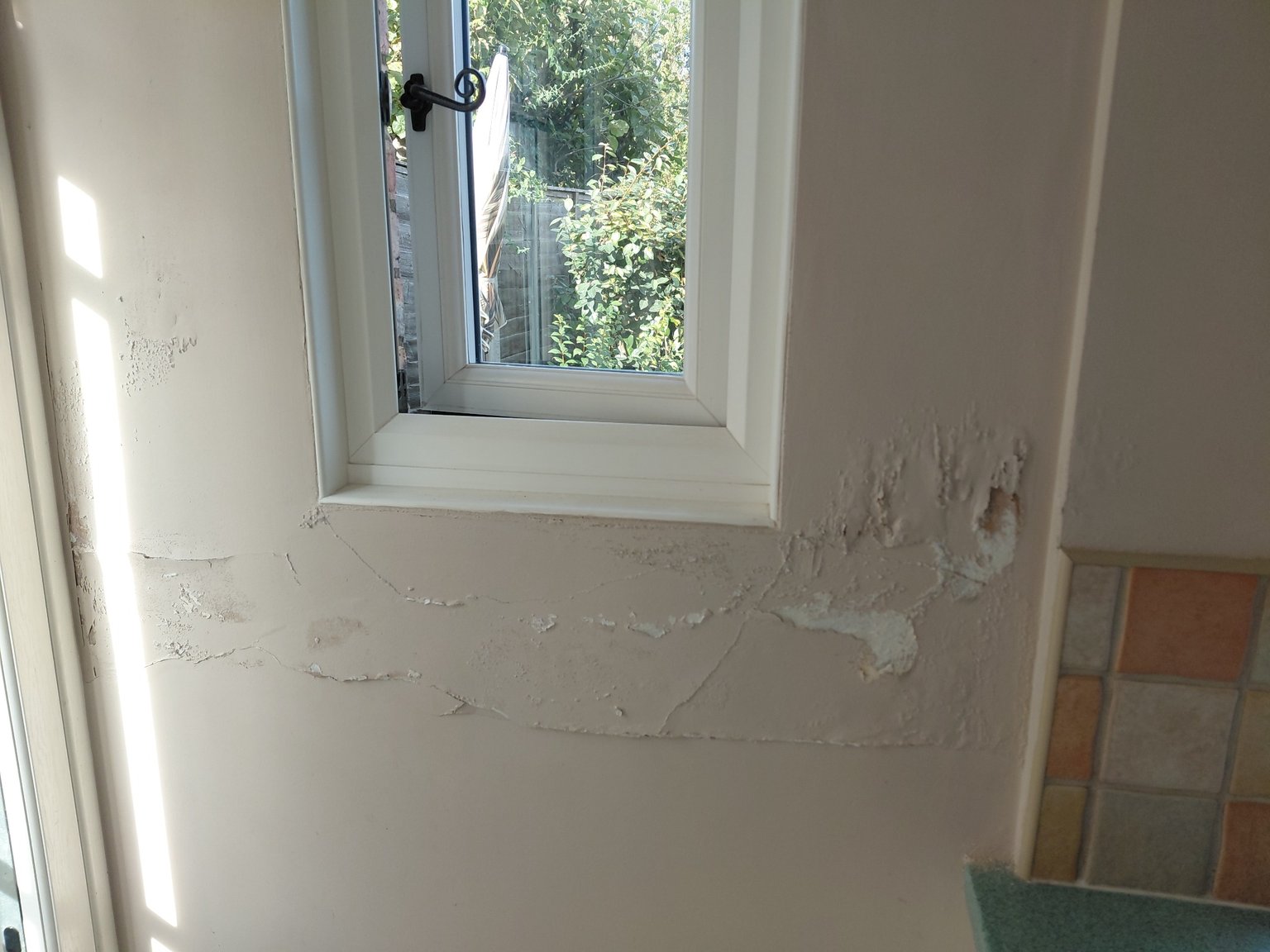
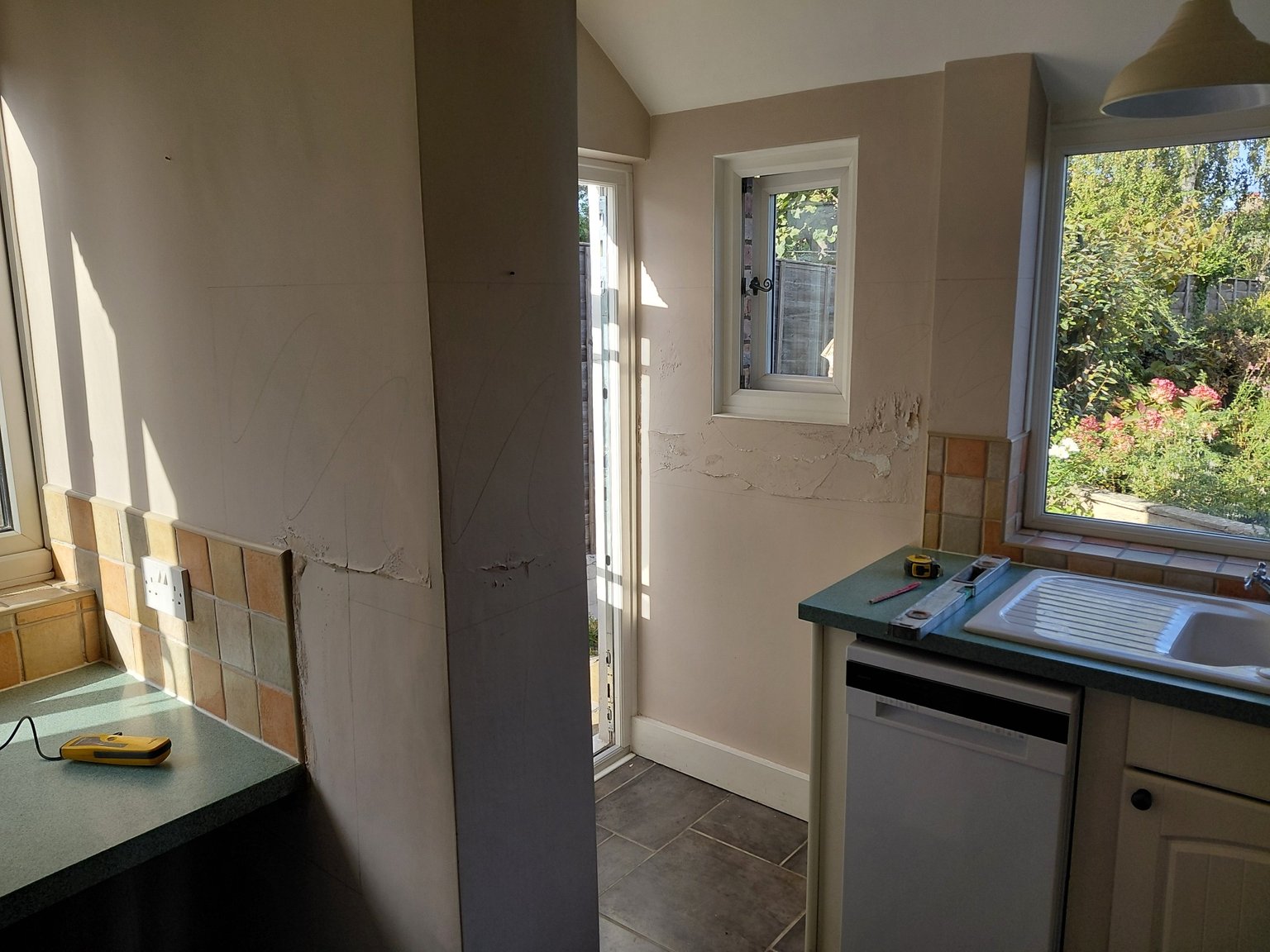
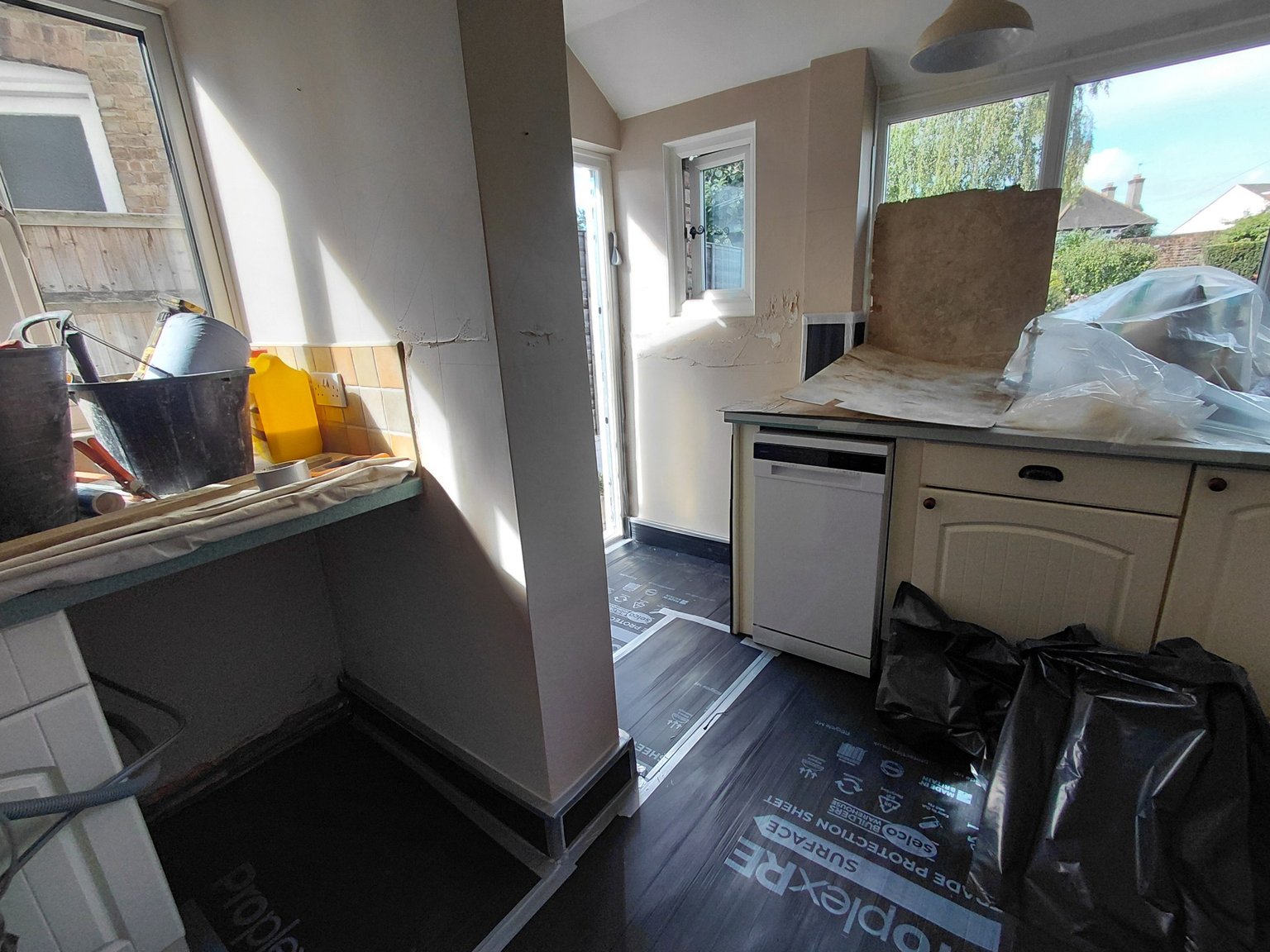
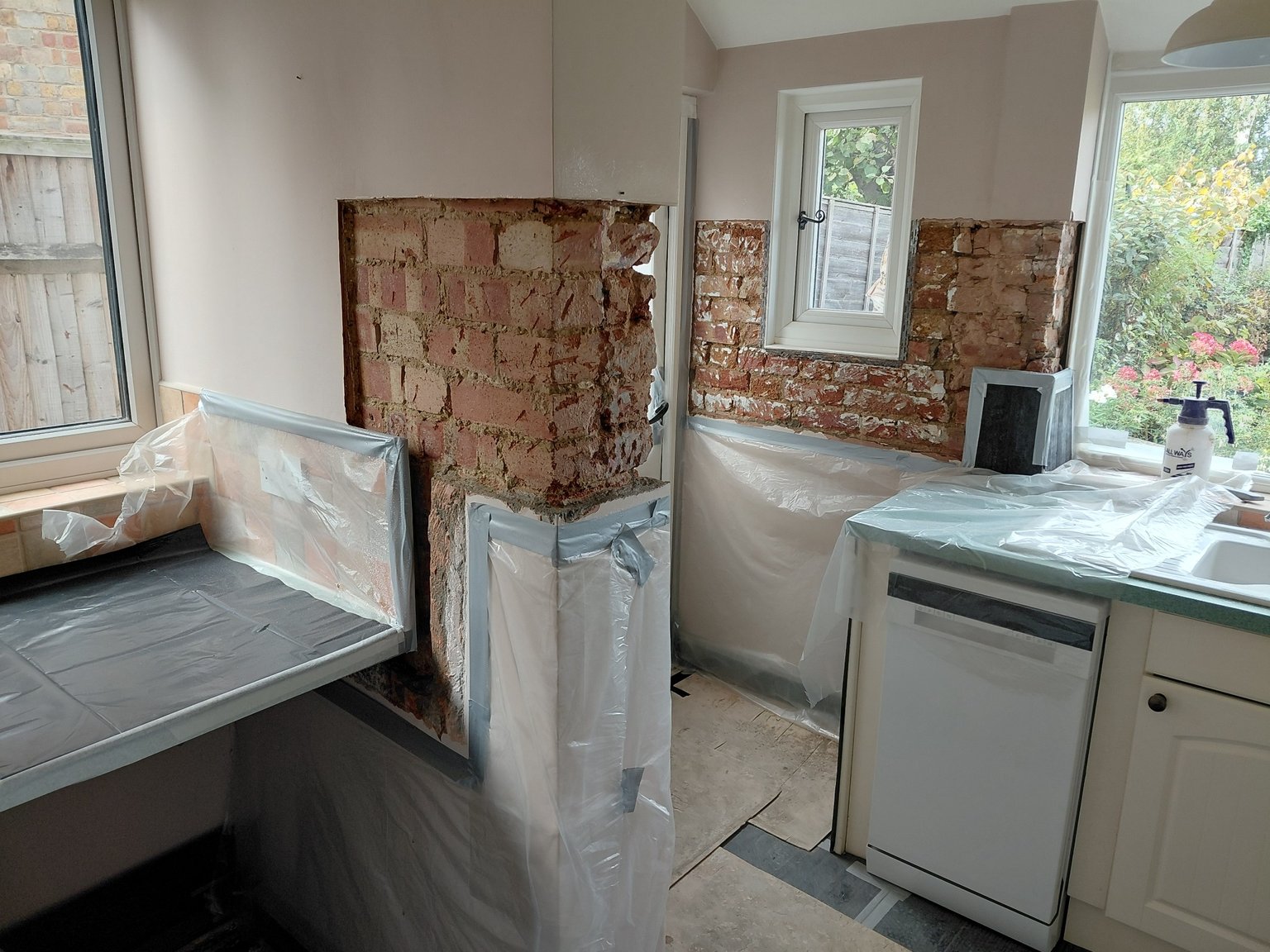
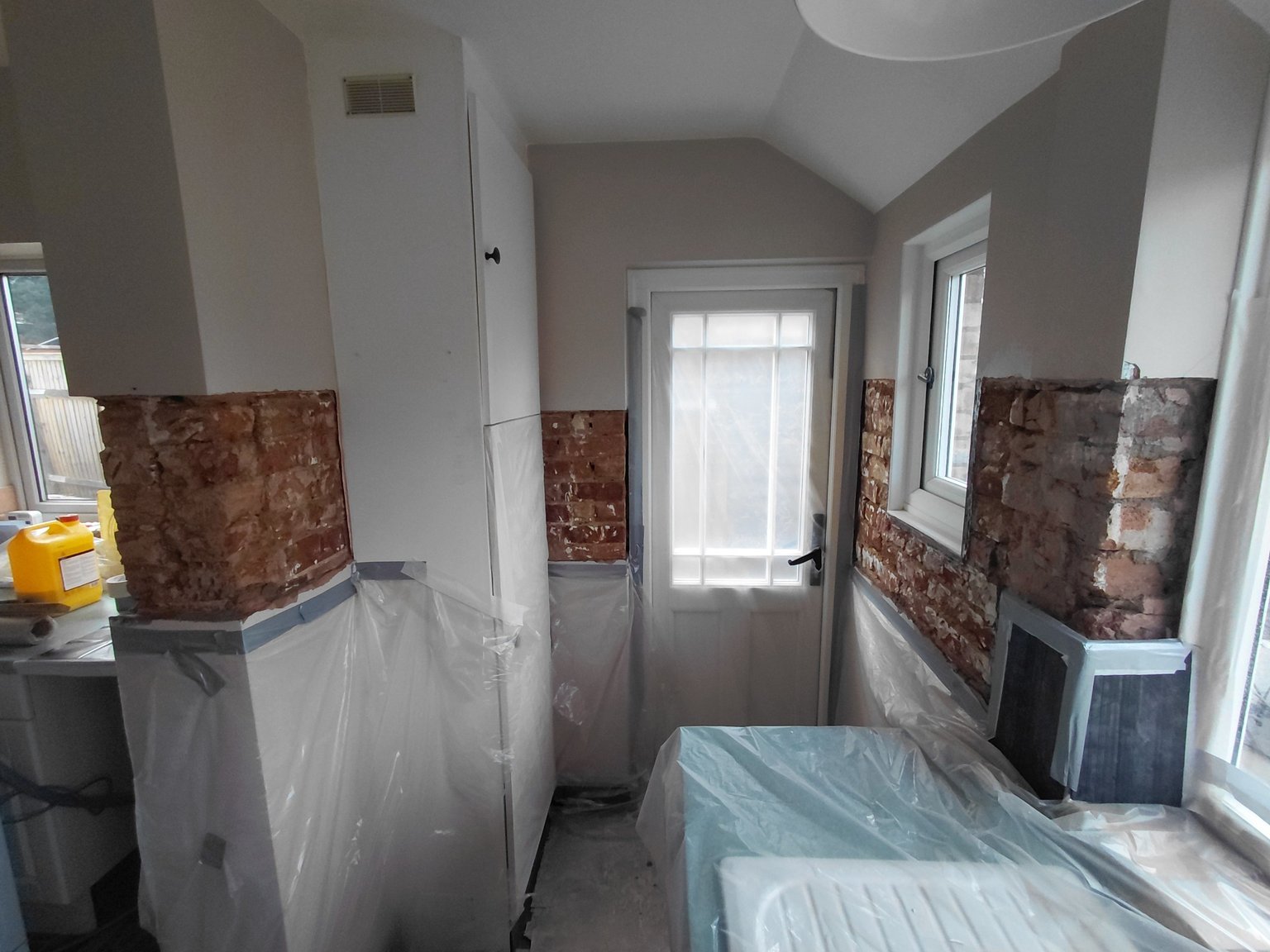
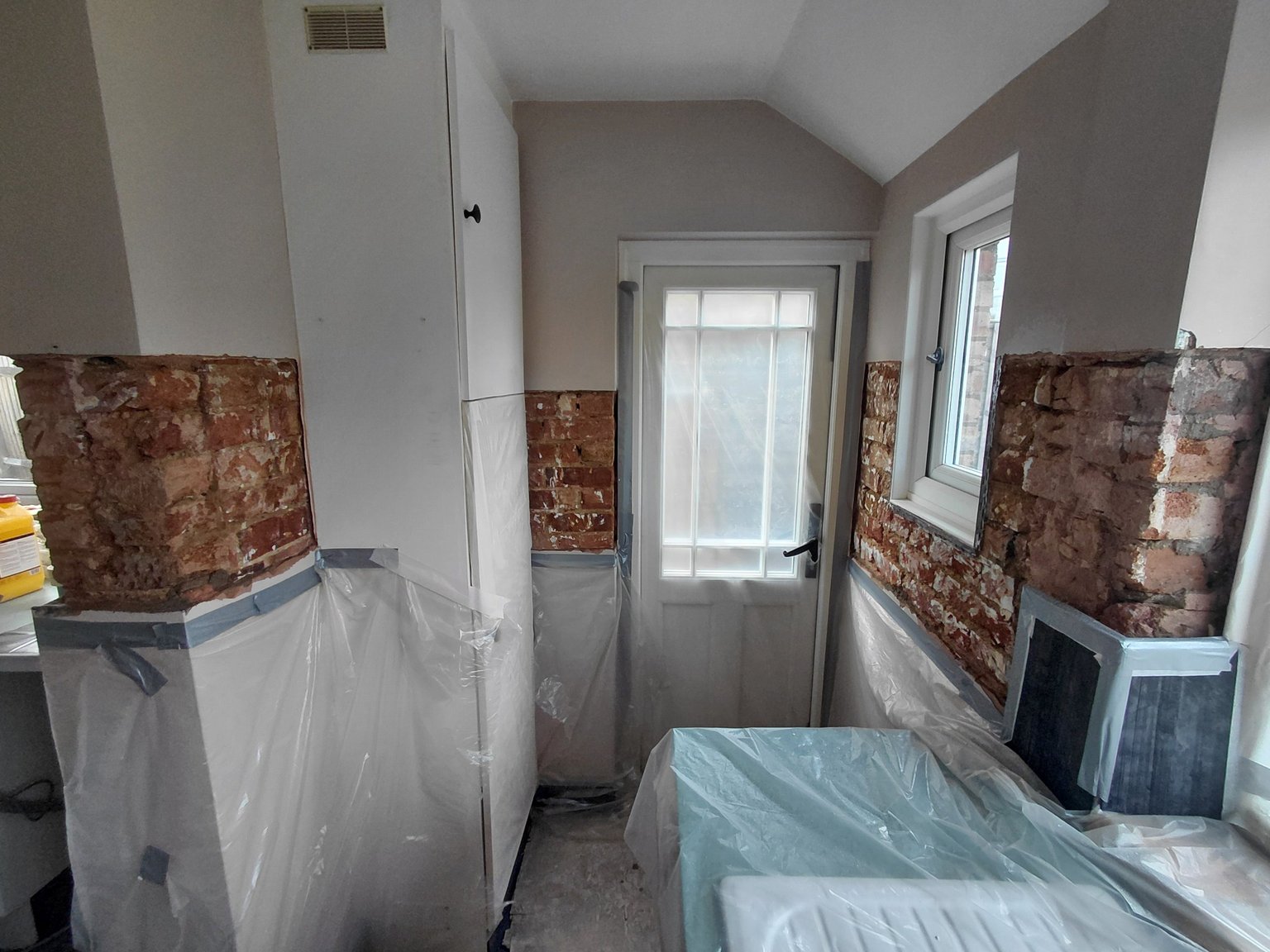
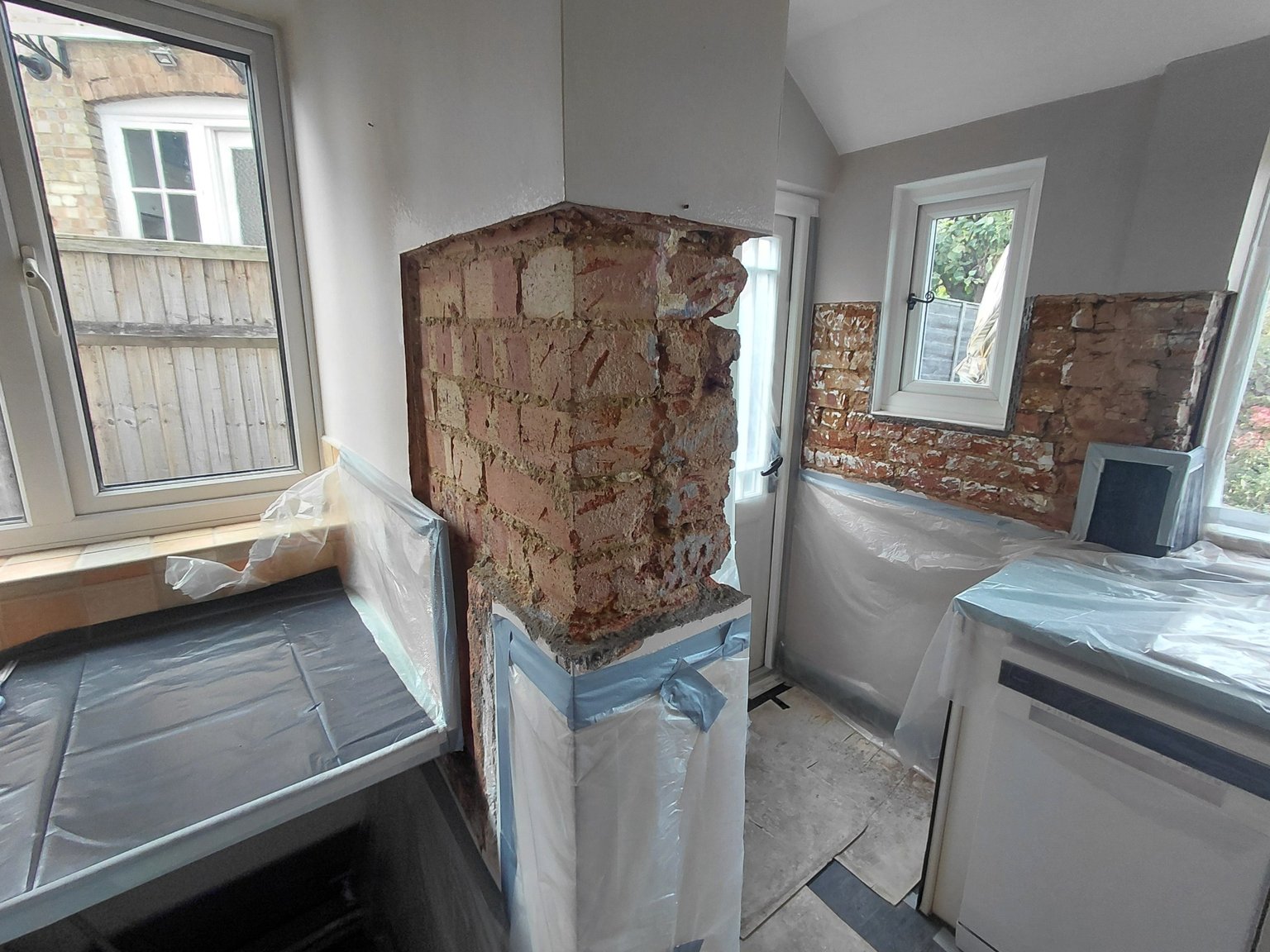
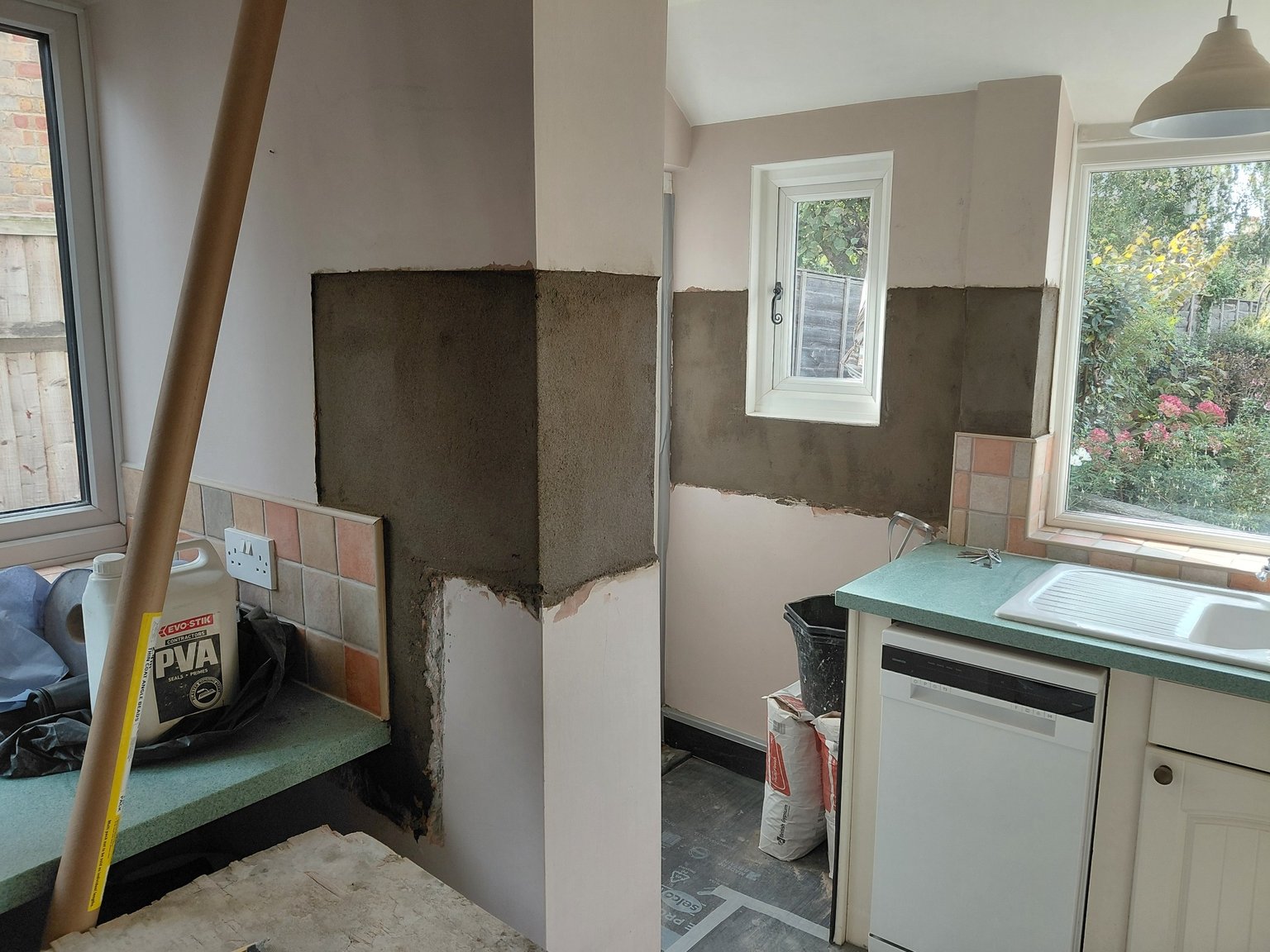
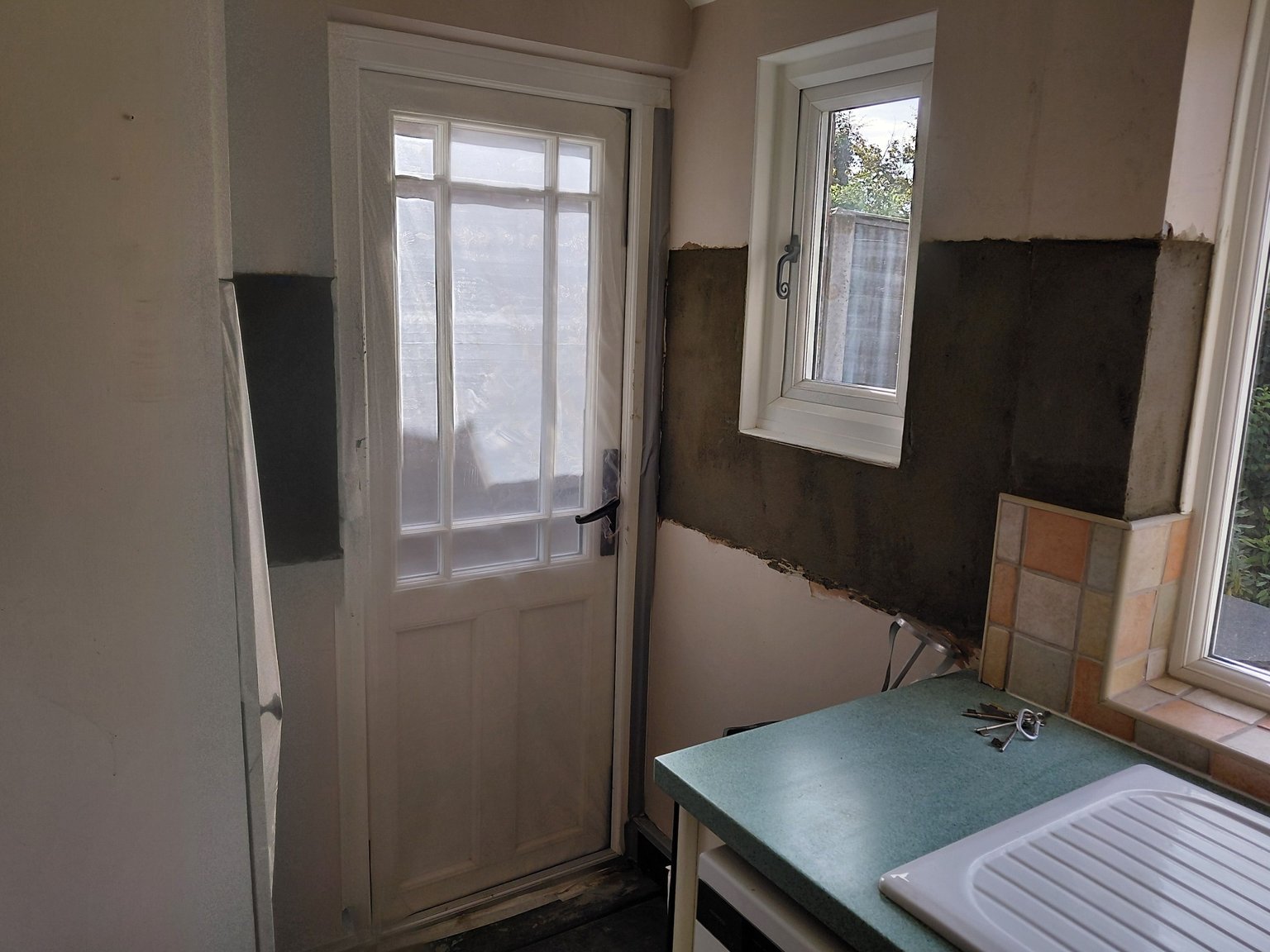
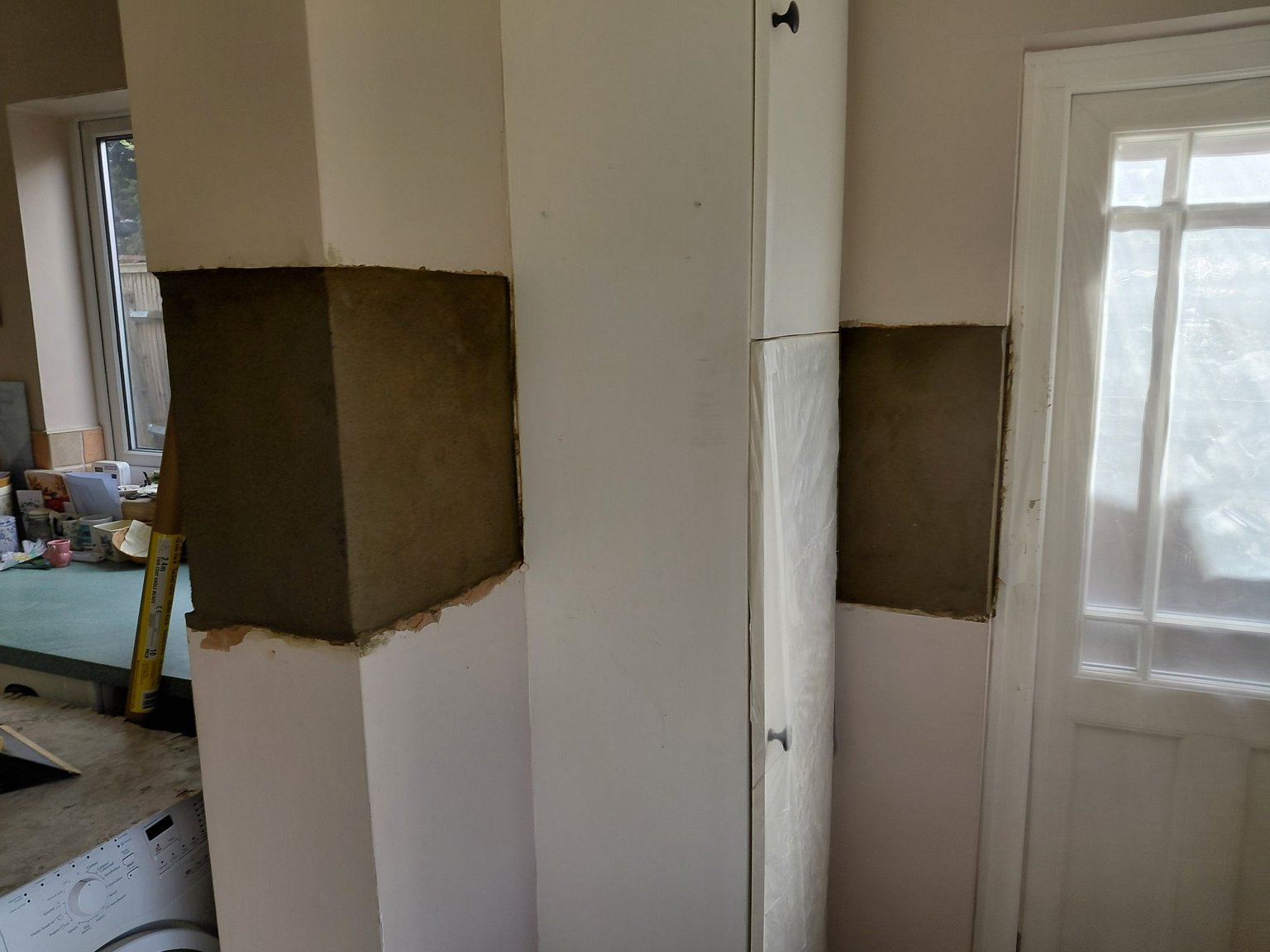
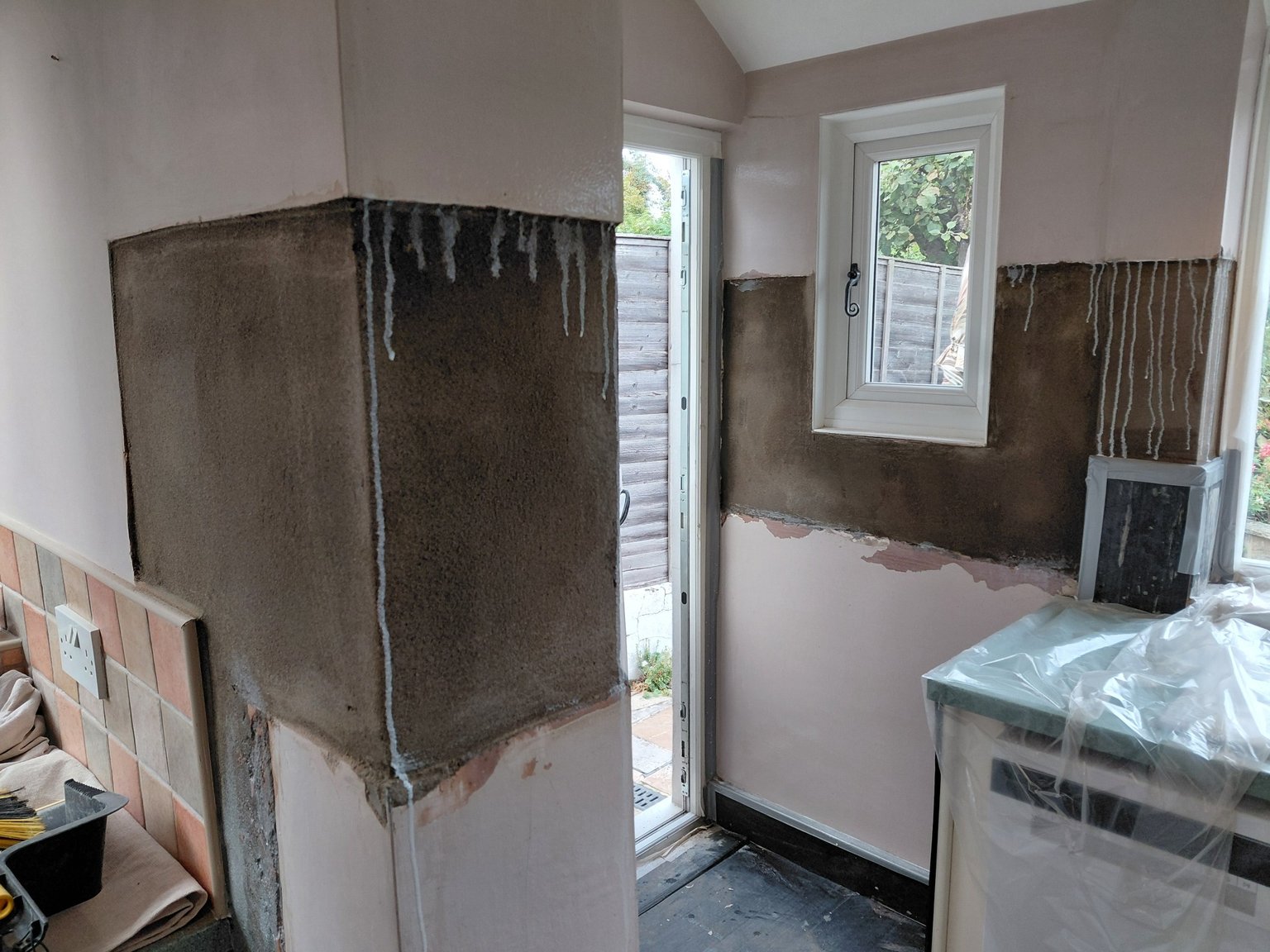
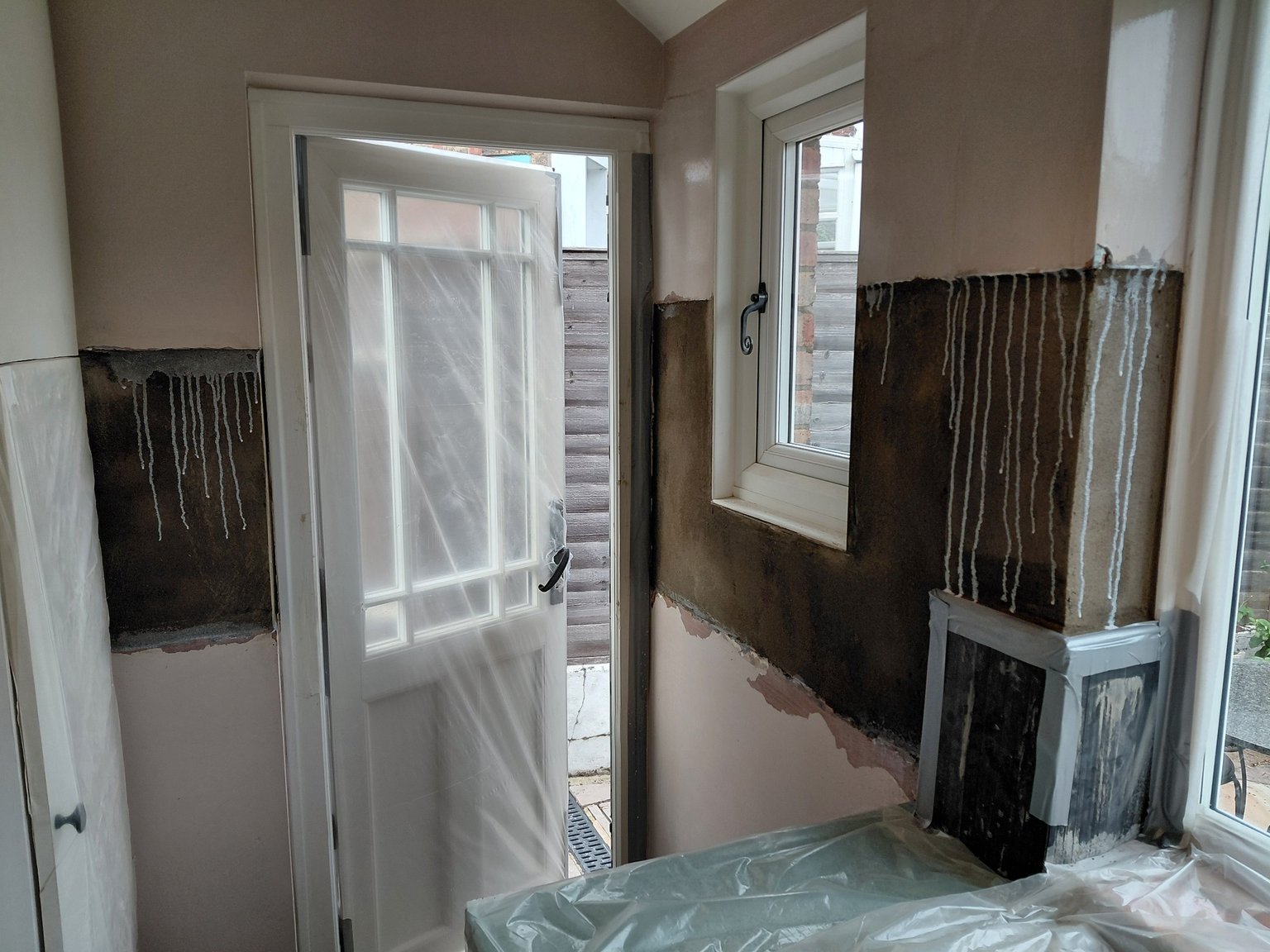
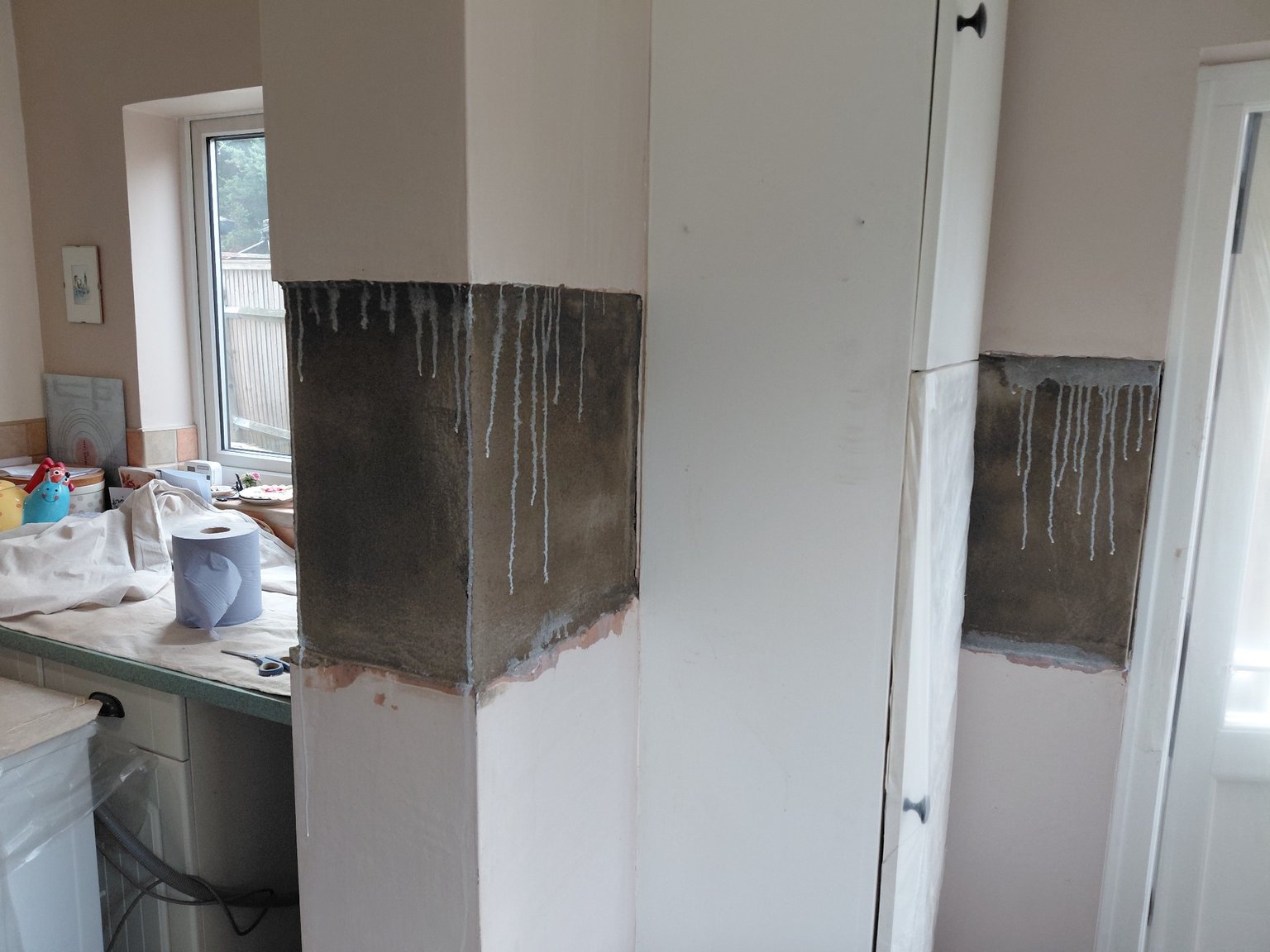
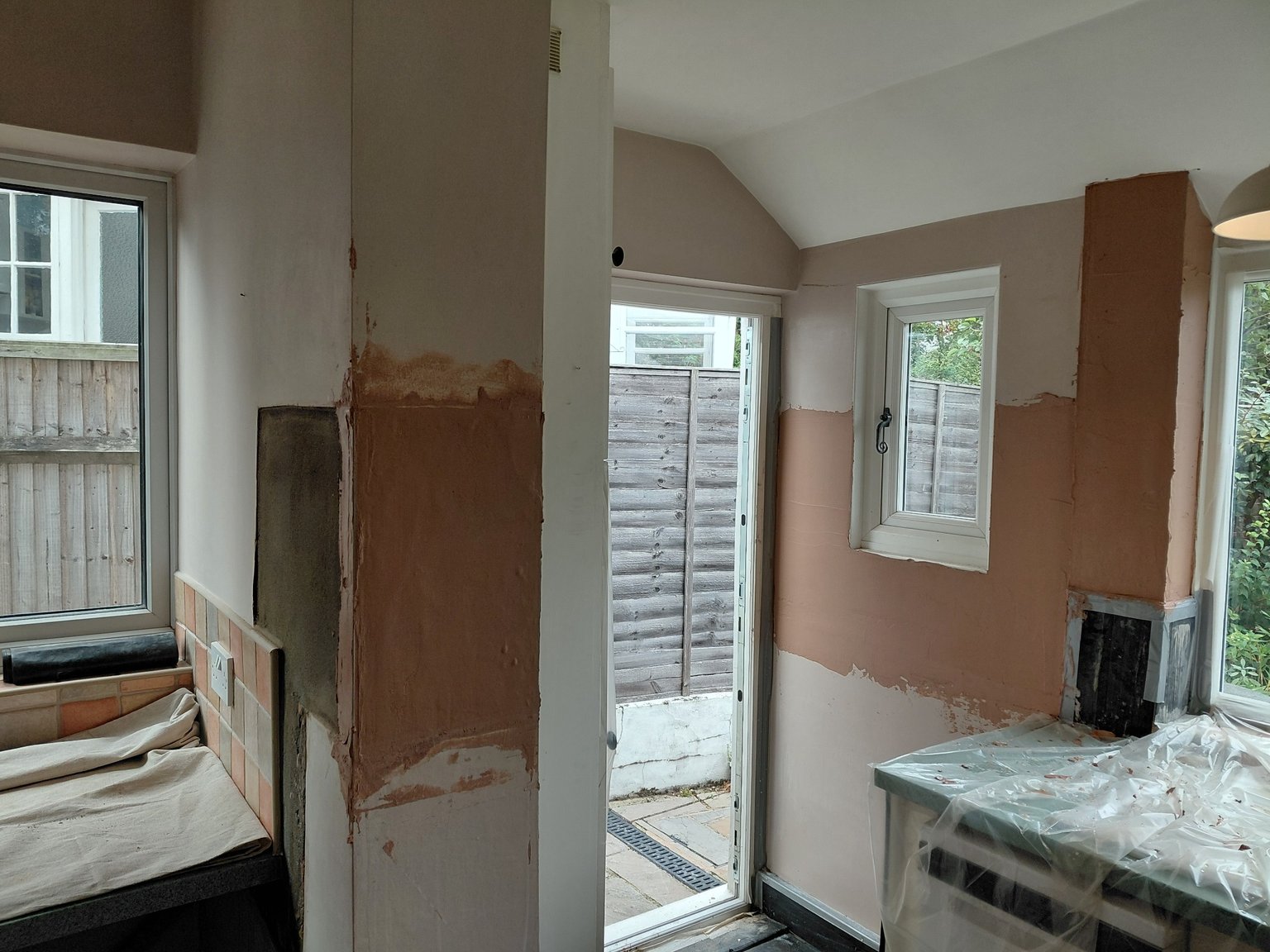
The available photographs show wall preparation and plaster reinstatement around the windows, doorway and return walls. Targeting the defective areas kept the scope proportionate to the recorded damage. Fresh plaster still needs time to dry before decoration; the photographs document completion of the wall repairs rather than a long-term moisture-monitoring result.
Local investigation and repair services for Sutton and Carshalton homes.
Sutton service pageRead the existing Carshalton case study.
Carshalton case studyExplore Atruss Preservation's case study directory.
All case studiesAn unresolved moisture source, a bridged or ineffective damp-proof course, and moisture or salts remaining in wall finishes can all contribute. The height of previous plaster repairs does not establish how far moisture or salt contamination now extends.
On this project, Atruss removed defective plaster at least 30 cm above the highest area registering damp to give the repair a margin beyond the affected finish. The appropriate removal height depends on investigation, salts, wall condition and the specified repair system; 30 cm is not a universal rule.
No. Electrical readings can also be influenced by salts, metal and the material being tested. They should be interpreted alongside the moisture pattern, construction, external conditions and further testing where needed.
Allow the specified drying and curing periods before decorating. Fresh plaster appearance is not proof that the underlying masonry has fully dried; follow the repair system and decorating guidance for the property.
Contact Atruss Preservation about your Carshalton Beeches or Sutton property.